ZeilerBadhaus
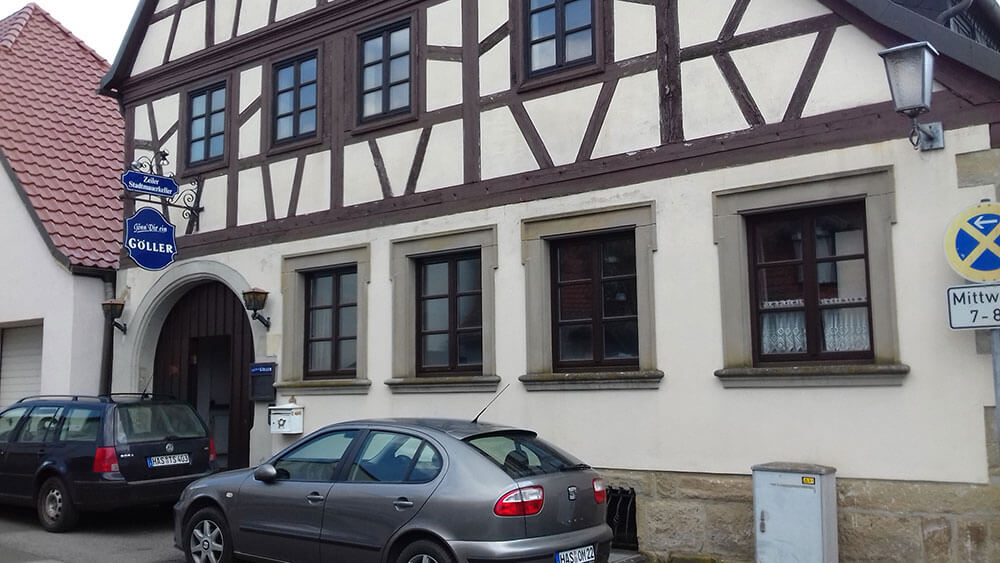
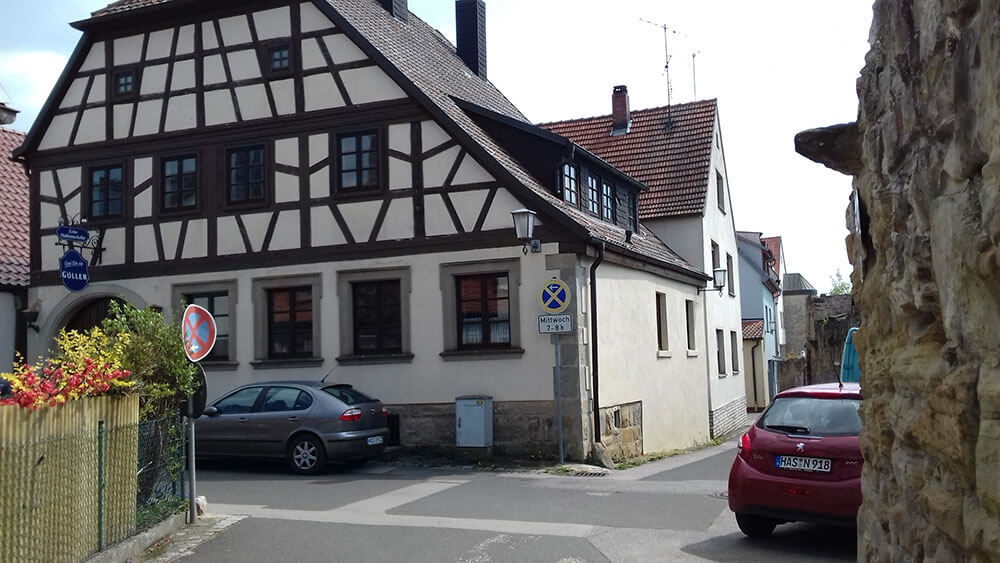
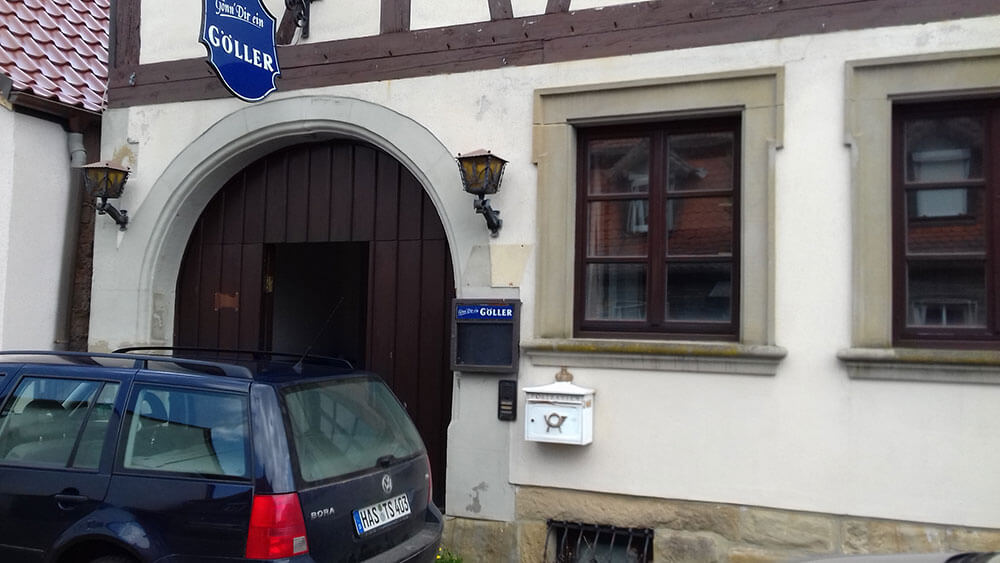
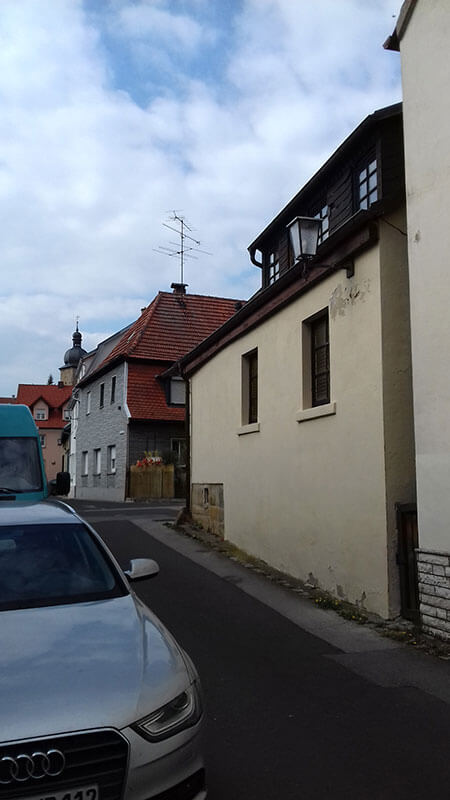
This property is a "FACHWERK" Haus which is reminiscent of Tudor style Houses of England. Construction is of fine quality Sandstone for the ground floor and wooden trusses or beams filled with rubble or Bricks for external and partition walls for the first floor and attic wattle & daub ceilings are used in between floors.
This style of exposed beams outside gives the "Fachwerk" name for the house. Up until 19th century most of such styled houses were plastered on the outside and the wooden beams were hidden. It then became fashionable from 1850's onwards to expose the wooden beams of the house for the passers- by and the plaster was removed externally.
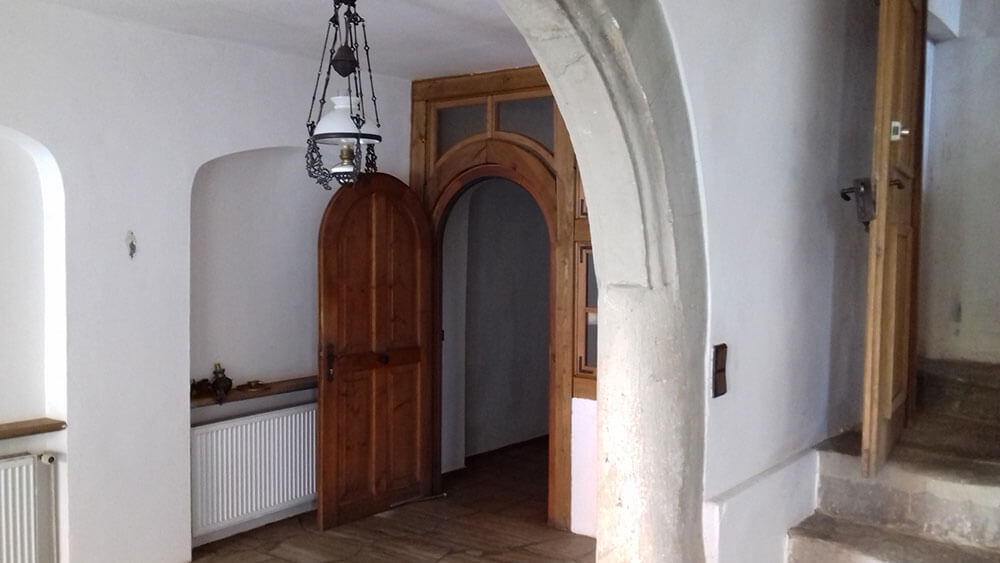
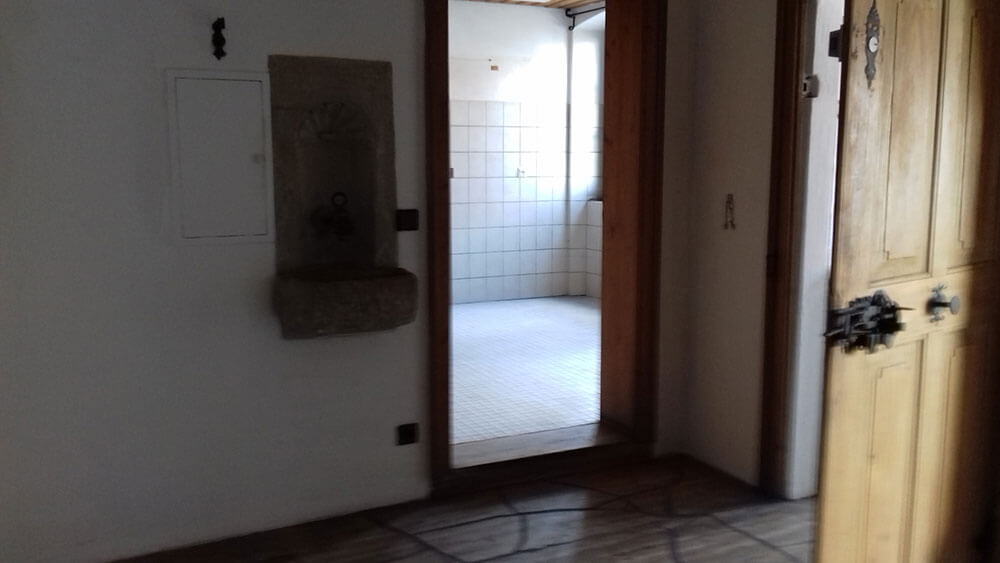
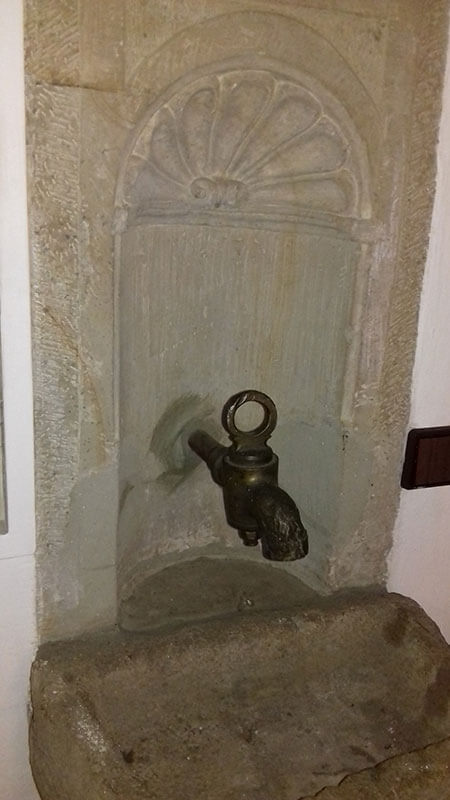
The house was originally built in 1730 for a gentleman named Hans Boelz who was a "Bader" (as people did not have bathrooms in their houses at the time they had to go to places where bathing facility was provided). We believe Hans Boelz used the house for bathing purposes due to the original fountain tap left in the house.
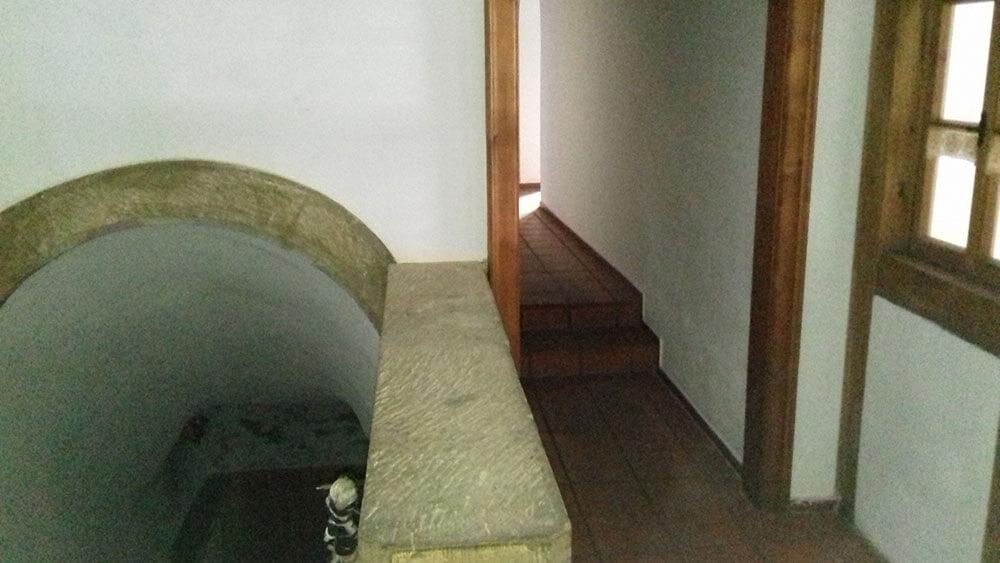
The house was of standard construction of its' times with a Cellar (Keller) which provided for the storage of a variety of produce, then a Ground floor of sandstone (sandstein) construction and the first floor and loft area of "Fachwerk" wooden trusses & beams externally.
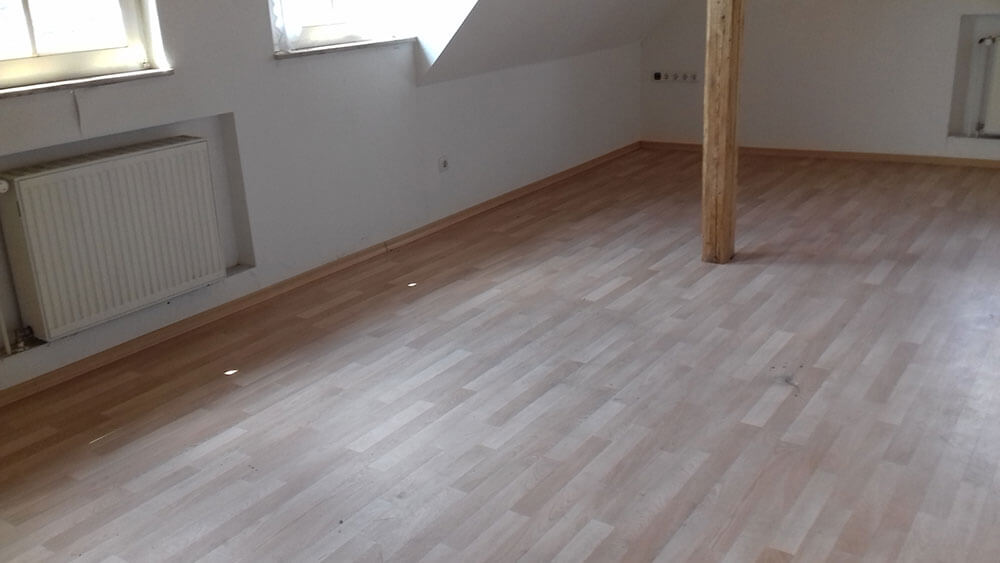
The roof was pitched as at the time it used to snow a lot during winter times and the weight of the snow could cause the roofs to collapse if the pitch was not steep enough. The height of the roof and the pitch also allowed a very high and large loft space which could be utilised for storing harvest, bales and animal feed.
Records indicate that a fire (brand) took place between 1730 & 1750 and the roof was rebuilt although even today one can observe some blackened roof beams in the loft area.
House was built in a relatively small plot of only 13m X 10 m but provided ample living space on the two floors and the cellar.
Like most other German property good records were kept. The chronology of the owners of the house from 1730 onwards is enclosed.
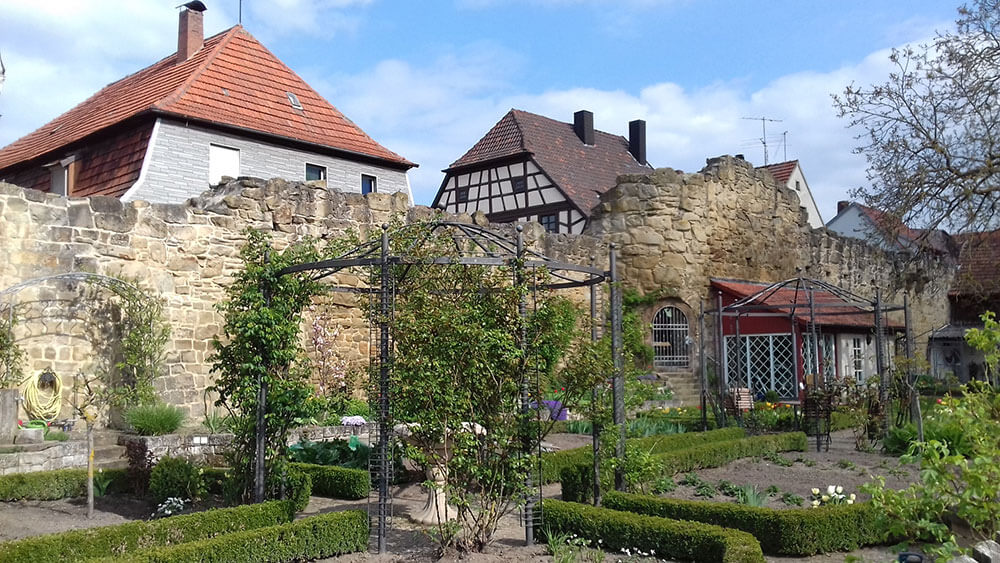
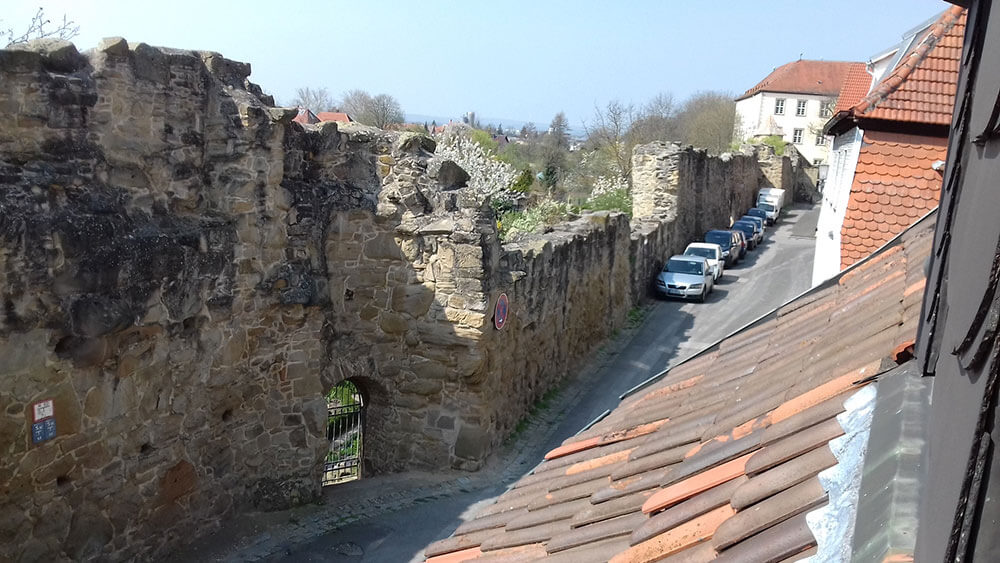
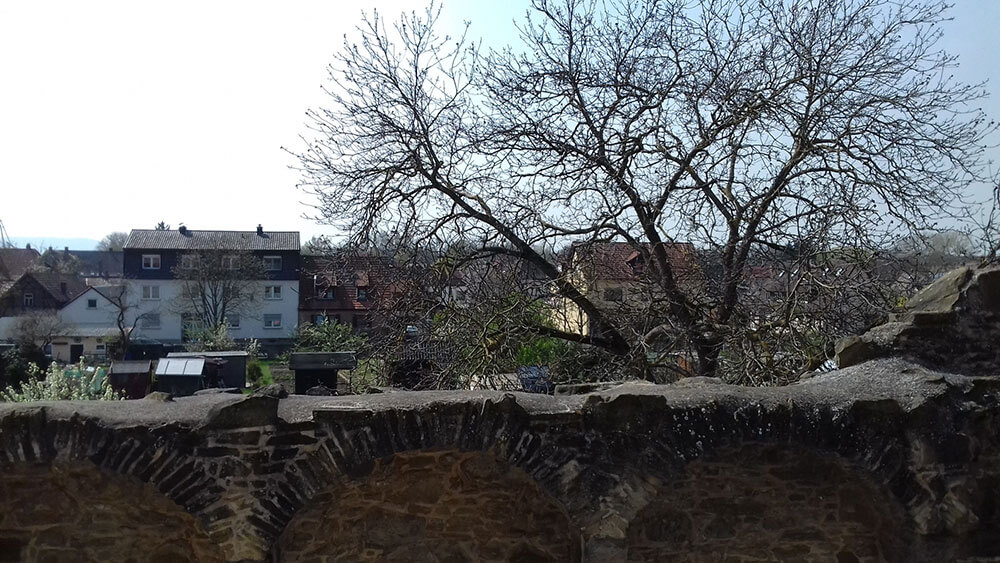
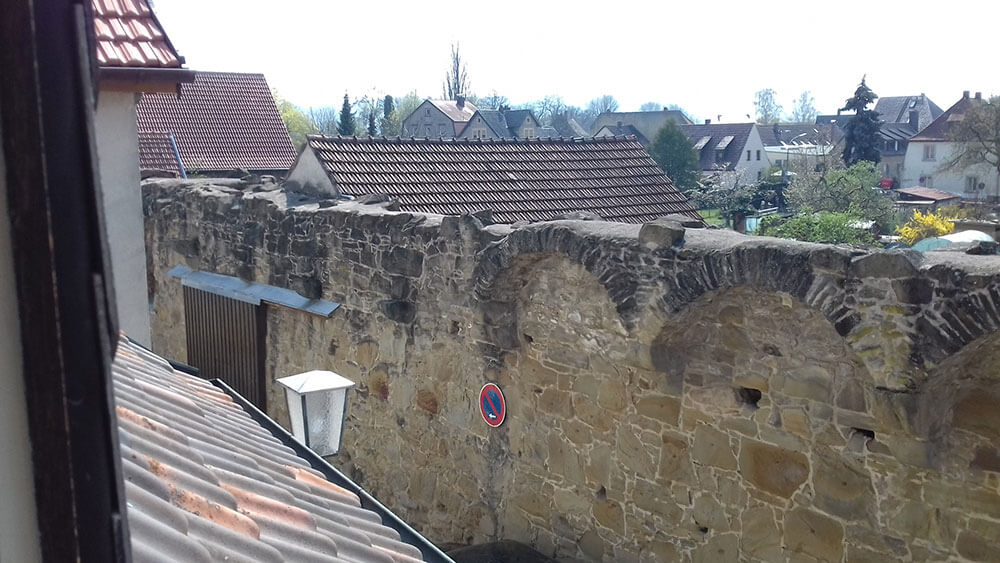
The proximity of the house to the 14-15th century town wall (see photos) makes the house a part of the town's history. (hence it's listing under the Denkmal no.D-6-74-221-2 with the B.L.F.D (Bayerische Landsamt fur Denkmal Pflege).
Zeil am Main had always a small population over the centuries and currently has around 6000 people. However back in the medieval times, it's strategic position bordering the two major powers Prince - Bishopric of Bamberg and the prince-Bishopric of Wurzburg played a major role when the town did change hands several times between the Two rival bishopric's during the period of 1300's to 1600's.
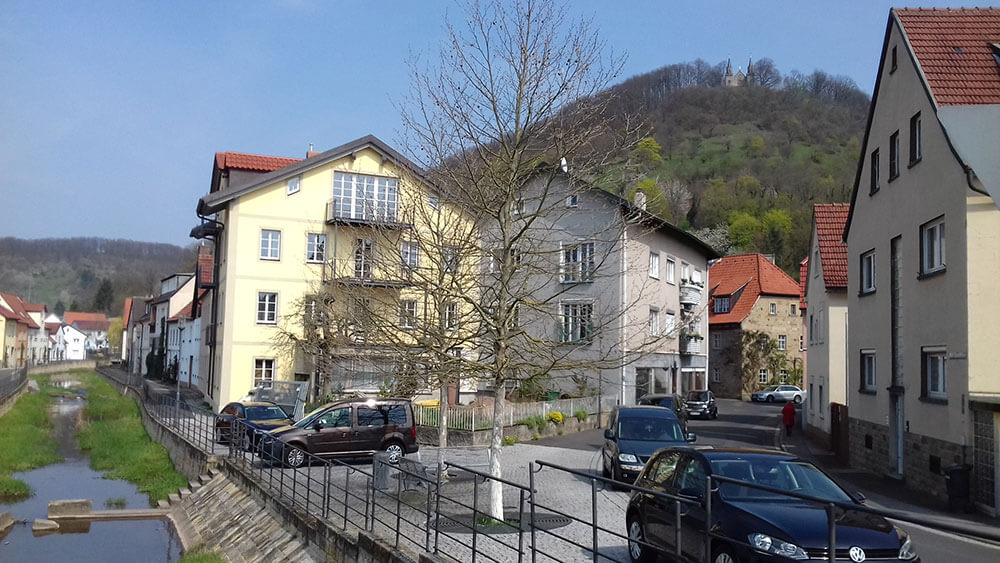
The town is overlooked by the castle of Schmachtenberg which is now in ruins and only foundations and small section of wall is left. A small chapel (Kapelle) is also on the hilltop dating back to medieval times.
The towns' historian has an excellent exhibit of the 1000 years of History of the town displayedon the shop windows (see photos in history section). More details on the history of the town can be found at the towns' official website of www.zeil-am-main.de.
More recently, the previous owners the house, Kaufhold family who bought the property back in the late 1980's turned into a restaurant. After a period of nearly 20 years the restaurant was refurbished into a "Weinstube" in the early 2000's. The opening night was presented by the celebrity actor Veit Relin as he was a friend of the family and lived close by.
Veit (the "handsome" as he was known) was married to the famous film star Maria Schell of Austria between 1966 and 1988 for a period of 22 years.
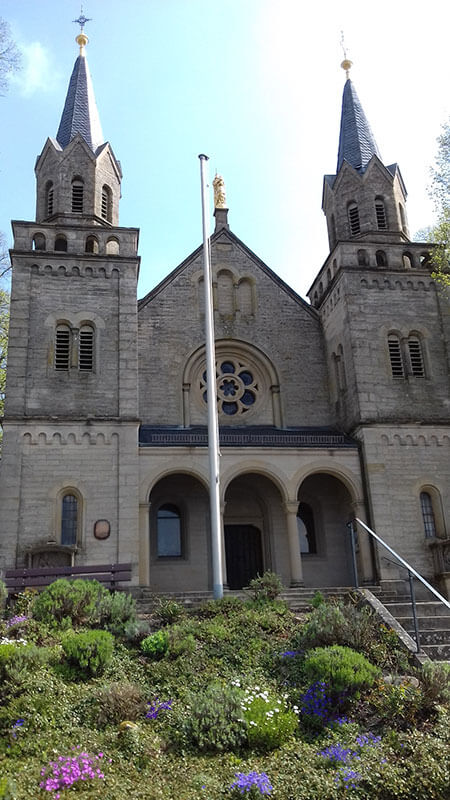
The town takes great pride in its' association with Vineyards surrounding it and of the chapel (kapelle) at the top of the hill over-looking the town. The chapel's history is detailed on the town's website. Another person of fame born in the town back in 1625 is a priest called Albrecht Degen who then succeeded to become the. Abbott of the nearby Ebrach Cathedral. Albrecht Degen noticed the grape variety called "Silvaner" when visiting Austria (possibly the Melk Cathedral in Wachau valley) and brought samplings back to his home town. Hence the famous "Silvaner" grape & wine spread to the whole of Germany through him. Every year during the first week of August the famous "Wine festival" is held in the town to commemorate the occasion.
Exterior images
Exterior video
Interior images